Aluminum formwork is a modular system of extruded aluminum alloy panels that are pinned together on site to form a full mold for walls, columns, beams, slabs and stairs. Concrete for the whole floor is then cast in place in one pour. A typical system weighs about 20–25 kg/m², can be reused 200–400 times, and allows a standard floor to be completed in about four working days
What Is Aluminum Formwork
Formwork is the temporary mold that holds fresh concrete until it gains enough strength to support itself. Aluminum formwork (also written aluminum shuttering) builds this mold from lightweight aluminum alloy panels instead of plywood, timber or heavy steel plates.
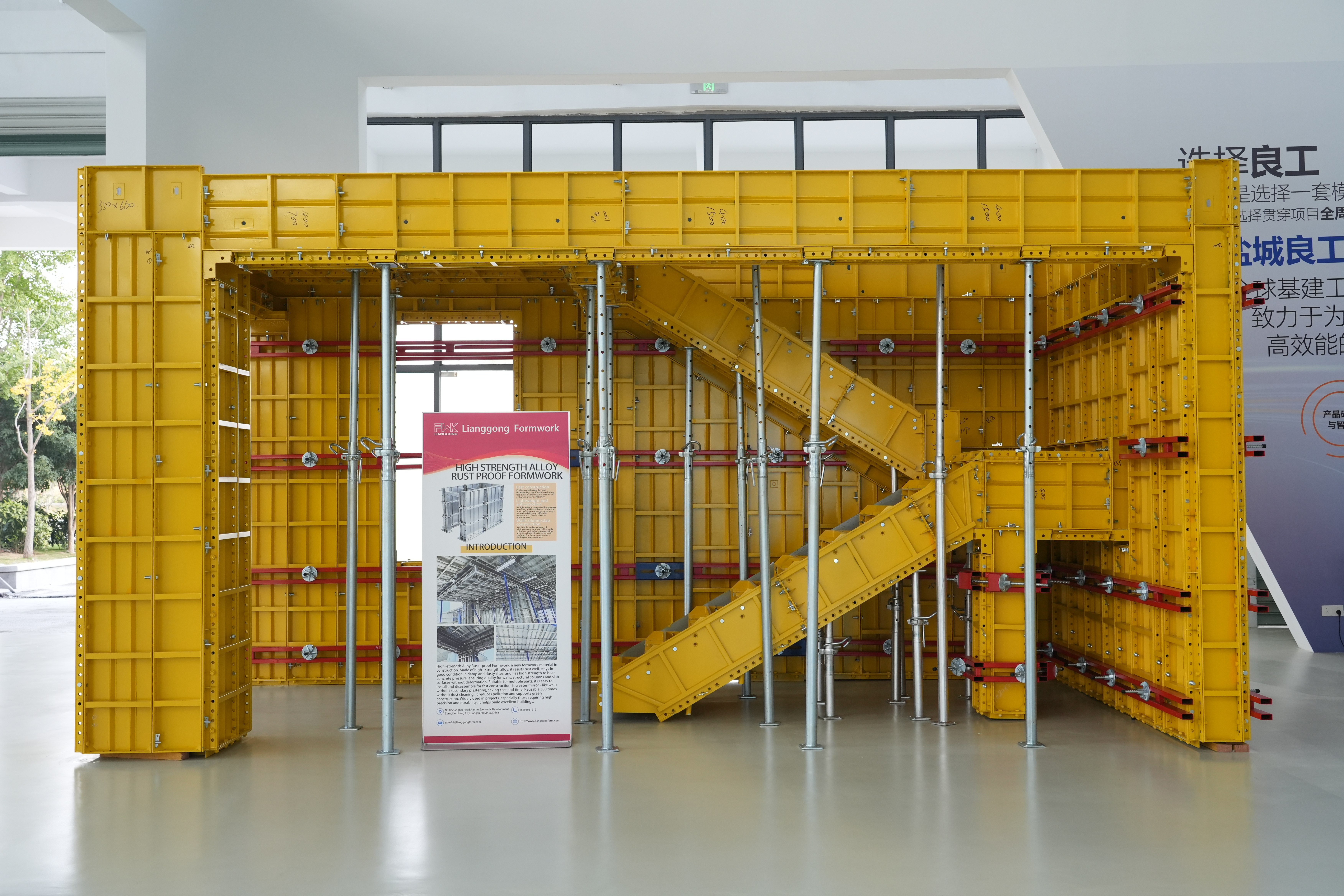
Three features set it apart from conventional systems:
It is a complete system, not just panels.
- Wall panels, slab panels, beam panels, corner pieces, props and connectors are designed together, so the entire structural floor is formed as a single unit.
It is cast-in-place.
- Walls, slabs and beams are poured together on site, producing a monolithic concrete structure without precast joints.
It is designed around a repeatable floor.
- The panels are arranged to suit the actual building layout, so the same set can be moved up floor after floor with minimal changes.
Construction Systems and Manufacturing Process
A quick-dismantling system
Lianggong aluminum formwork is a quick-dismantling formwork system. According to product data, one layer (one set of formwork with 3–6 sets of prop systems) can be completed in four working days. With an average weight of 20–25 kg, the panels can be removed and assembled entirely by hand, and the simple design makes the system easy for workers to learn.
Construction systems
Lianggong offers aluminum formwork in the following construction systems:
- Tie rod system
- Flat rod system
- Aluminum-wood combination system
- Aluminum formwork system for PC projects
- Multi-story flow construction system
- Underground civil defence garage system
Manufacturing process
Lianggong aluminum formwork is produced through the following processes: sawing and cutting, punching, welding, shaping, inspection, shot blasting and surface treatment, resulting in the finished aluminum formwork.
Main Components of an Aluminum Formwork System
An aluminum formwork system is built from a set of standard components. Flat formwork panels make up the walls, columns and roofs, and come in pull-tab and tie-bar versions. C-slots, G-panels and angle aluminum handle the corners, stair runs and external angles, while hangers support the hanging formwork. Combination pins connect the components together, and pull tabs tie the wall panels on both sides to keep the formed size and strength.
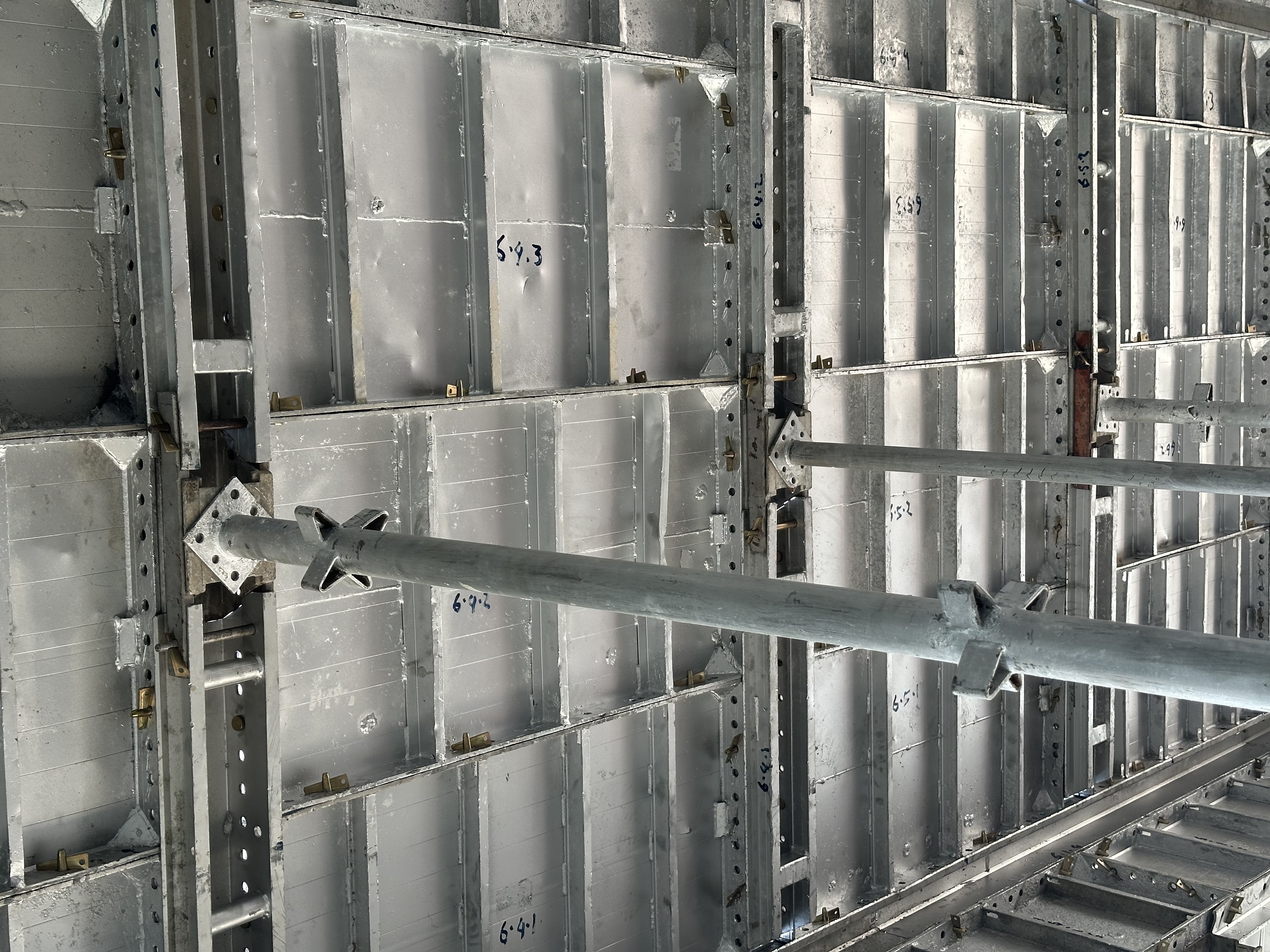
Flat-Tie vs. Tie-Rod: Two System Types
Aluminum formwork systems use one of two methods to hold opposite wall panels together. Choosing the right one depends on your building type.
| Flat-tie (pull-tab) system | Tie-rod system | |
| How it works | Fixed-size flat ties stay inside the wall | Reusable tie rods pass through the wall |
| Concrete finish | High flatness; 500 mm wide panels mean fewer seams | Good finish; holes are left by the rods |
| Waterproofing | Good. Ties remain inside the wall, so no external wall sealing is needed | Rod holes must be sealed |
| Walers | 3 m floor height: 3 inner and 4 outer lines of walers; fewer walers and lower labor intensity | As designed per project |
| Bearing capacity | Standard | High |
| Flexibility | Best for repetitive standard layouts | Suits complex shapes; holes are easy to modify on site |
| Installation speed | Standard | Faster than the pull-tab system |
| Best for | Residential towers with repeated floor plans | Public buildings, complex projects, buildings with frequent layout changes between floors |
Rule of thumb: For reusable aluminum concrete formwork for housing projects with identical floors, the flat-tie system gives the best finish and waterproofing. For commercial or public buildings with complex or changing layouts, the tie-rod system offers more flexibility and higher load capacity.
Aluminum Formwork Material Comparison
The table below compares the most common formwork materials qualitatively. Aluminum figures come from Lianggong’s product data; the other columns describe typical characteristics, and actual values vary by product and supplier.
| Factor | Aluminum formwork | Steel formwork | Timber / plywood formwork | Plastic formwork |
| Panel weight | Light (avg. 20–25 kg/m²), handled by hand | Heavy, usually needs crane lifting | Light, but absorbs water and gains weight | Light |
| Reuse life | 200–400+ cycles | High | Low; plywood wears quickly | Medium |
| Concrete finish | Smooth, no plastering needed | Smooth, but seams can leak if panels deform | Rougher; plastering usually required | Smooth |
| Stiffness / load | Approx. 30 kN/m², enough for most residential slab formwork | High | Depends on timber beams and props | Lower |
| Corrosion | Does not rust | Rusts without maintenance | Rots and swells with moisture | Does not rust |
| Site waste | Very little | Little | High (offcuts, damaged sheets) | Little |
| Scrap value | High; aluminum is fully recyclable | Low | Almost none | Low |
| Initial cost | Higher | Medium–high | Low | Low–medium |
| Best for | Repetitive high-rise and housing projects | Heavy civil works, special shapes | Small or one-off structures | Small, simple structures |
Key takeaway: Timber has the lowest purchase price, but it has to be replaced after a few uses. Aluminum costs more up front, but because it can be reused hundreds of times, the cost spread over each use is lower. The more repetitive floors your project has, the stronger this advantage becomes.
How Long Can Aluminum Formwork Be Reused?
A complete aluminum formwork set can be reused more than 200 to 400 times, according to Lianggong’s product data. Because the original material is integrated and standardized, when the set moves to a new project only about 20% of the non-standard panels usually need to be replaced. The standard panels continue to be used.
Actual reuse life depends on:
Cleaning after every pour.
- Remove concrete residue before it hardens.
Release agent.
- Apply a suitable release agent before each pour. This protects the panel surface and makes stripping easier.
Careful stripping.
- Use the proper mold remover tools instead of heavy impact, which can dent panels.
Handling and storage.
- Stack panels flat and protect edges and pin holes.
Panel numbering.
- Reinstalling each panel in its coded position reduces modification and wear.
Small dents on older panels are normal and do not prevent reuse, as long as the panel face and edges remain flat enough to meet the finish requirements.
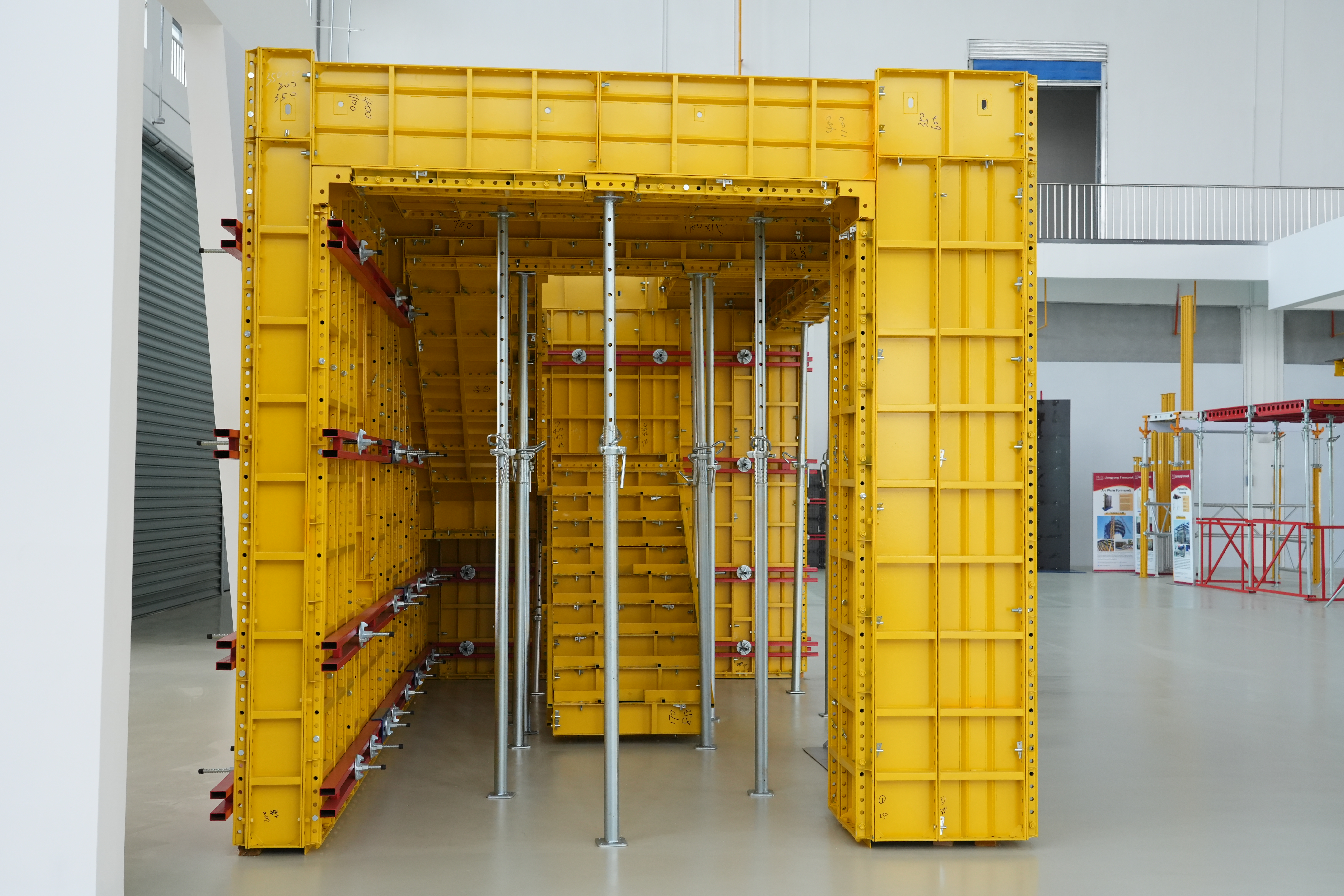
Where Aluminum Formwork Works Best and Where It Doesn’t
The aluminum formwork system suits walls, horizontal floor slabs, columns, beams, staircases, windows and floating (bay) plates, as well as secondary structures such as bond beams and tie columns.
Best fit:
- High-rise residential towers and apartment blocks
- Affordable and mass housing developments with repeated unit types
- Hotels, dormitories and serviced apartments
- Commercial buildings with a standard floor design
Less suitable:
- Projects with only a few floors and no repetition (unless several identical buildings share one set)
- Highly irregular architecture where every floor is different
Very thick mass-concrete elements, where other systems may be more economical
FAQ
What is aluminum formwork made of?
It is made from extruded aluminum alloy profiles that are welded and machined into panels, along with accessories such as pins, wedges, flat ties or tie rods, steel walers and steel props.
What are the advantages of aluminum formwork vs. steel formwork?
Aluminum formwork is much lighter, so it can be handled manually without a crane. It is also faster to install, does not rust, gives a smooth surface that usually needs no plastering, and has higher scrap value at the end of its life.
How long can aluminum formwork be reused?
With proper cleaning, release agent and careful stripping, a full set can be reused 200–400 times or more. For a new project, usually only about 20% of non-standard panels need to be replaced.
How fast is aluminum formwork construction?
With one set of formwork and 3–6 sets of props, a typical floor can be completed in about four working days.
What is the load capacity of aluminum formwork?
Most aluminum formwork has a loading capacity of about 30 kN/m², which meets the slab formwork requirements of most residential buildings. Projects with special loads should be checked by the supplier’s engineers.
Is aluminum formwork worth the higher initial price?
Yes, for projects with many repeated floors or several identical buildings. The cost per use falls with every cycle, while labor, plastering and waste costs are also reduced.
Plan Your Next Project with Lianggong
Lianggong Formwork supplies aluminum formwork alongside hydraulic auto-climbing formwork, H20 timber beam formwork, table formwork, steel frame formwork, plastic formwork and safety screens. Products are available off-the-shelf or customized, and OEM/ODM orders are accepted.
Company: Yancheng Lianggong Formwork Co., Ltd.
Website: https://www.lianggongformwork.com https://www.fwklianggong.com https://lianggongform.com
Email: sales01@lianggongform.com
Tel: +86-18201051212
Address: No.8 Shanghai Road, Jianhu Economic Development Zone, Yancheng City, Jiangsu Province, China
Post time: Oct-19-2026